
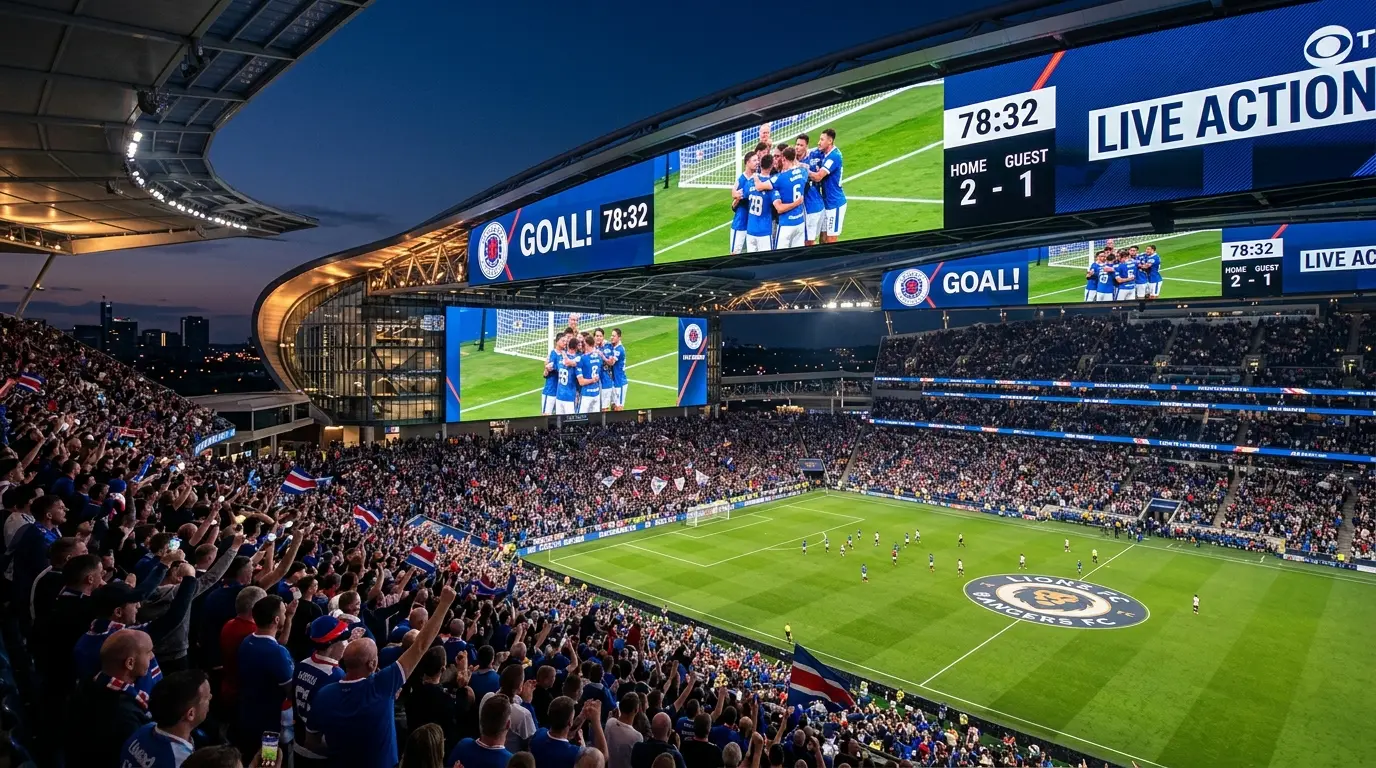
The 2026 FIFA World Cup isn't just another tournament—it's the moment sport fully embraces immersive audiovisual technology. From sprawling LED canvases to AI-driven content personalization and real-time wayfinding, stadiums across North America are preparing for a seismic shift in how fans experience live football. But this revolution isn't confined to the pitch. Every venue in the Middle East and GCC—from arenas to hospitality spaces—can harness these same technologies to elevate fan engagement, drive revenue, and create unforgettable moments.
At DigiComm, we've spent years integrating cutting-edge display solutions for stadiums, events, and hospitality venues across the UAE and beyond. The 2026 World Cup represents a watershed moment for stadium technology. Here's what's coming—and how your venue can lead the charge.
The LED Display Revolution in Modern Stadiums
Stadium LED displays have evolved from simple scoreboards into dynamic narrative-telling machines. Modern stadiums feature:
- Massive perimeter boards — Wrapping around the field for immersive replays and real-time statistics
- Halo-style ribbon displays — High-refresh, edge-to-edge screens for seamless visual flow
- Out-of-home (DOOH) integration — Dynamic advertising that adapts to audience demographics and real-time events
- High-brightness, wide-viewing-angle technology — Crystal-clear imagery from every seat in the house
The numbers speak for themselves. Venues with strategically placed LED displays report a 32% increase in pre-game fan sentiment and secure 20% higher sponsorship premiums through digital takeovers. For every fan in a stadium, LED technology doesn't just show the action—it amplifies the emotion.
AI-Powered Content Personalization: The Game Changer
Here's what makes 2026 different. AI will transform static displays into intelligent, audience-aware systems. Instead of showing the same content to everyone, stadium LED systems will deliver personalized experiences based on:
- Language and geography — Automatic localization of commentary, hashtags, and regional ads for global audiences
- Seat location and viewing angle — Optimized stats and replays tailored to where each fan is sitting
- Demographic insights — Age-targeted advertising, sponsor promotions, and concession offers that resonate with specific audience segments
- Real-time engagement data — Displays that respond to crowd energy, purchase patterns, and fan sentiment in real-time
This isn't a gimmick. When fans see relevant content in their preferred language, with stats that matter to their interests, engagement soars. Museums, cultural attractions, and hospitality venues in Dubai have already demonstrated this: AI-powered interactive displays boost visitor engagement by 50% and create measurable improvements in retention and satisfaction.
Wayfinding & Navigation: The Often-Forgotten Hero
Large stadiums are complex. Fans arriving for a World Cup match face a common problem: finding their seat, the nearest restroom, concessions, and exits—without missing the action. Traditional static signage is clunky and confusing.
Next-generation wayfinding solutions combine:
- Digital directory kiosks — Touch-enabled screens that guide guests to amenities, showing real-time queue times
- AR-enhanced mobile navigation — Stadium apps that overlay directions directly onto fans' phones
- Smart signage networks — Dynamically updated directional displays that adapt to crowd flow
- Analytics dashboards — Real-time data on bottlenecks, abandoned searches, and venue utilization
The result? A Formula 1 venue saw 44% more map sessions year-over-year when wayfinding met actual fan needs. For stadium operators, this translates to fewer confused guests, less staff support overhead, and more time fans spend enjoying the venue instead of hunting for amenities.
360-Degree Audio & Immersive Soundscapes
LED walls grab attention, but sound creates memory. Next-generation stadiums pair massive displays with:
- Surround-sound and spatial audio systems that adapt to content and crowd size
- Directional speakers that focus announcements to specific zones without overwhelming the entire venue
- Microphone arrays that amplify crowd energy and player audio without distortion
The marriage of visual spectacle and immersive audio is what transforms a match into an unforgettable experience.
Real-Time Analytics: Data-Driven Decision Making
Beyond the fan experience, modern stadium LED systems generate unprecedented operational intelligence. Real-time analytics reveal:
- Concession demand patterns — Which food/beverage items spike during halftime, enabling dynamic inventory
- Crowd hotspots — Density maps showing where fans congregate, informing safety and staffing decisions
- Sponsorship ROI — Precise measurement of ad engagement, brand mentions, and social media lift
- Operational friction points — Queue times, seating confusion, accessibility issues that need immediate attention
The most successful venues treat their LED networks as both customer-facing and operations-facing tools—continuously learning and adapting.
Why This Matters to the UAE & GCC
The Middle East isn't waiting for lessons from 2026. The region has become a global testing ground for immersive technology:
- Dubai's smart airport initiatives have pioneered biometric wayfinding and personalized traveler information
- Saudi Arabia's event tech ecosystem is investing heavily in immersive displays for entertainment and sports venues
- UAE hospitality venues are competing on experience innovation—and LED + AI integration is a critical differentiator
For venue operators, hotel chains, and event organizers in the GCC, the question isn't whether to adopt these technologies—it's whether you can afford not to. Competitors who embrace AI-driven LED systems will capture higher sponsorship premiums, stronger fan loyalty, and operational efficiency that directly impacts your bottom line.
The Role of Professional Integrators
Deploying these technologies isn't a DIY project. Stadium LED systems demand:
- Precise site surveys and photometric modeling — Ensuring visual quality from every seat
- Integration expertise — Seamlessly connecting LED displays, broadcast feeds, wayfinding kiosks, and analytics platforms
- Content strategy and deployment — Managing multilingual, real-time, personalized content across dozens of displays
- Ongoing support and optimization — Fine-tuning brightness, refresh rates, and content schedules based on actual performance
At DigiComm, we've spent years as a Master Distributor for BrightSign (the global leader in digital signage media players) and partners like Nexmosphere (sensor-driven interactivity) and SwedX (sustainable display technology). We understand the complete ecosystem—hardware, software, content, and operations—required to deliver results.
Building Your Stadium LED Strategy for 2026 and Beyond
If you're a venue operator or event organizer in the UAE, GCC, or beyond, here's a practical roadmap:
1. Audit your current infrastructure — Where are the gaps in fan experience? Wayfinding confusion? Sponsor visibility? Operational data blindspots?
2. Plan your LED network — Determine placement, size, brightness, and content strategy for main displays, perimeter boards, and directional signage.
3. Choose the right media platform — BrightSign players are the gold standard for reliability, security, and feature richness. Alternatives lack the maturity and ecosystem support.
4. Integrate wayfinding and analytics — From day one, design for data collection. Real-time insights are where you unlock ROI.
5. Build content workflows — Plan how you'll manage multilingual content, real-time updates (scores, promotions, safety alerts), and personalized experiences.
6. Measure and iterate — Track fan engagement, operational metrics, and sponsorship value. Every season, optimize based on data.
The Future is Here
The 2026 World Cup will showcase stadium technology at its finest—massive LED displays, AI-driven personalization, seamless wayfinding, and immersive audio creating a fan experience that rivals anything fans see at home. But this isn't the future anymore. It's the present. Venues that wait will find themselves competing with technology-forward competitors who've already captured audience loyalty and sponsorship premiums.
Whether you're preparing for a major event, upgrading a sports venue, or designing the next hospitality landmark in Dubai, the time to invest in AI-powered LED display systems is now. The technology is proven. The ROI is measurable. The only question is: will your venue lead, or follow?
Ready to future-proof your venue? DigiComm specializes in designing and deploying enterprise-grade LED display solutions for stadiums, events, and hospitality spaces across the Middle East. From initial concept through installation, content management, and ongoing optimization—we handle the complexity so you can focus on delivering unforgettable experiences. Contact us today to discuss your 2026 vision.