
SGI Dubai 2026 arrives at an important moment for the Middle East’s visual communications industry. Digital signage is no longer a screen added at the end of a project. It is becoming an intelligent, connected layer across retail stores, event venues, hotels, transport hubs and public spaces. For technology buyers visiting the region’s established sign and print exhibition, the useful question is not simply, “Which display looks best?” It is, “Which complete system will deliver measurable value after installation?”
SGI MENA’s official positioning now extends beyond traditional sign and print equipment to LED, digital displays, professional audio and lighting technology. That wider scope reflects how projects are actually commissioned in Dubai: hardware, content, control, sensing and support must work as one experience. Here are seven trends buyers should evaluate when comparing solutions at SGI Dubai 2026.
1. LED Is Becoming an Architectural Material
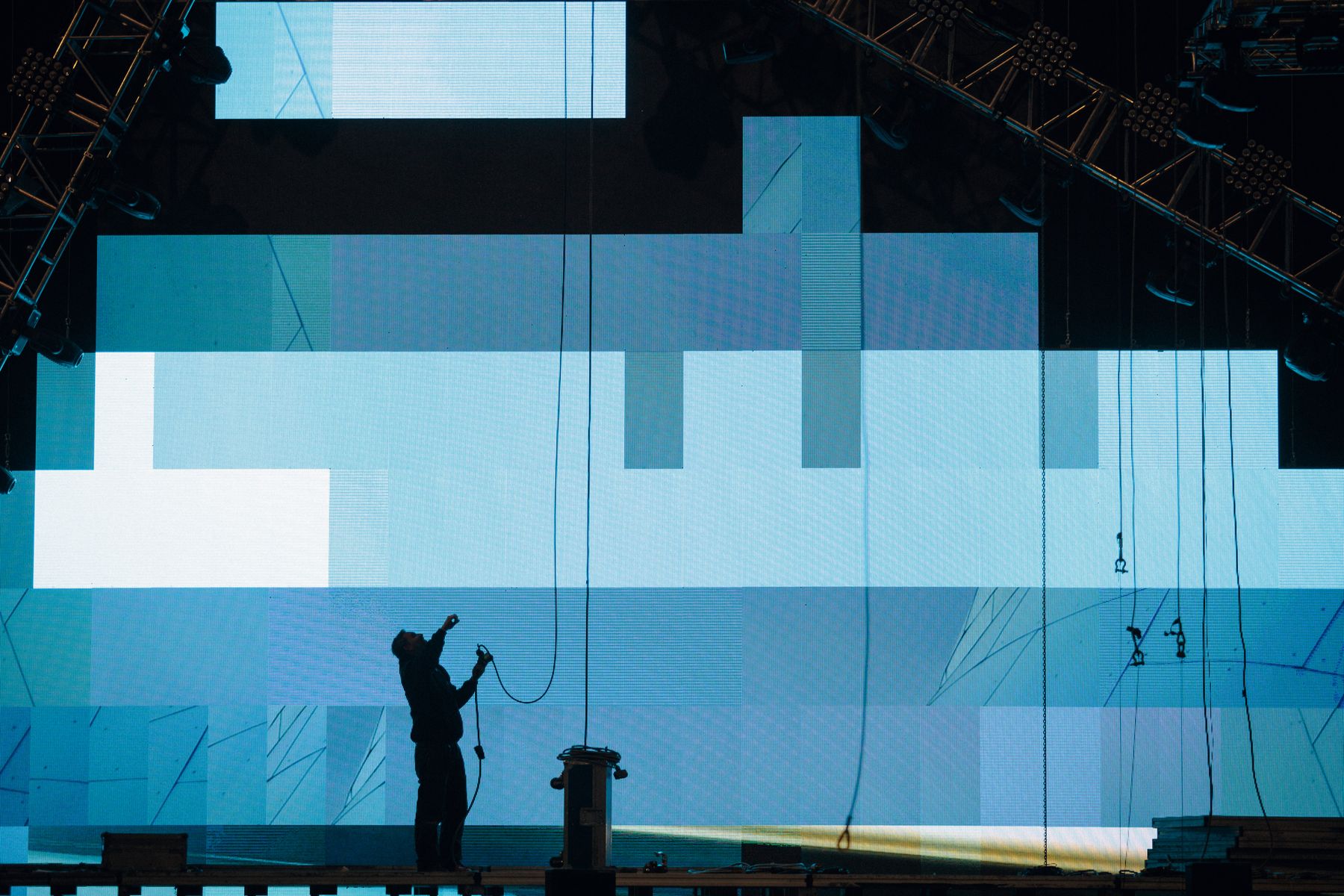
LED is moving beyond conventional rectangular video walls. Transparent meshes, flexible modules, fine-pitch indoor panels and custom shapes allow displays to follow glass façades, columns, curved stages and retail features. The opportunity is significant, but architectural LED demands more than an impressive demonstration.
Buyers should ask about pixel pitch at the intended viewing distance, brightness in the real environment, access for maintenance, heat management, structural loading and content resolution. In Dubai, ambient light and temperature make specification especially important. A screen that performs perfectly in a dark exhibition hall may require a different brightness class, enclosure and cooling strategy outdoors or behind sun-facing glass.
2. AI Is Shifting from Content Creation to Operations
Generative content will attract attention, but the more valuable AI applications may be less visible. Modern signage platforms can assist with campaign scheduling, asset tagging, proof-of-play analysis, anomaly detection and preventive maintenance. For multi-site networks, these capabilities reduce the time teams spend checking screens and help technicians focus on genuine faults.
The practical test is governance. Ask vendors what data the system uses, where it is processed, how a human approves changes and what happens if the AI service is unavailable. An enterprise-grade deployment should improve the workflow without turning the signage network into a black box. DigiComm’s approach combines dependable playback infrastructure with clearly defined content and monitoring processes, keeping operators in control.
3. Interactive Displays Must Prove Their Purpose
Touchscreens remain useful, but interactivity now includes presence sensing, gesture control, RFID, lift-and-learn triggers, computer vision and mobile handoff. Technologies such as Nexmosphere sensors can make content respond when a shopper approaches, picks up a product or places two products side by side.
At SGI Dubai 2026, look past the novelty of a demo. Identify the business action the interaction should support: product discovery, lead capture, wayfinding, queue reduction or dwell-time improvement. Then examine latency, accessibility, cleaning, privacy, analytics and fallback behaviour. The best interactive installation feels immediate and intuitive; visitors should not need instructions to understand what to do.
4. Retail Media Is Raising the Measurement Standard
In-store screens are increasingly treated as media inventory rather than a digital replacement for posters. Retailers want to schedule campaigns across locations, verify that content played and connect exposure with outcomes such as store visits, engagement or sales. This puts new pressure on content management systems, player reliability and reporting.
A retail media network should support precise screen grouping, campaign rules, proof of play, brand-safe approvals and integration with relevant business data. It should also respect privacy by design. For UAE retailers, multilingual creative and local context matter just as much as automation. A technically sophisticated network still underperforms if its content is not relevant to the audience standing in front of it.
5. Sustainable Signage Is About the Whole Lifecycle
Energy efficiency is becoming a purchasing criterion, particularly across large networks. Automatic brightness control, scheduled power states, efficient LED components and low-power technologies such as colour e-paper can reduce consumption. Yet sustainability extends beyond the electricity used by the display.
Buyers should consider repairability, module replacement, product lifespan, remote support and whether a system can be upgraded without discarding the entire installation. Reliable media players and remote device management can prevent unnecessary site visits. The most sustainable screen is often one that is correctly specified, maintained and kept productive for longer.
6. The Media Player Remains Mission-Critical
Spectacular panels receive most of the attention, but the player and control layer determine whether content runs reliably every day. High-resolution playback, synchronisation, HTML5 support, secure updates, remote diagnostics and integration with sensors are essential for sophisticated installations.
When evaluating a system, request a live demonstration of recovery after power or network interruption. Ask how devices are provisioned, how credentials are protected and how content continues when connectivity drops. Purpose-built BrightSign media players are widely used in professional signage because dependable operation and flexible integration are fundamental to the platform rather than optional extras.
7. Content Design Is Catching Up with Display Innovation
Unusual display formats need content designed for their geometry, viewing angle and physical setting. Transparent LED, anamorphic corner displays, panoramic canvases and interactive walls cannot deliver their potential with a standard 16:9 video stretched to fit. Content teams need to be involved before the hardware dimensions are finalised.
Real-time 3D, CGI, motion design and responsive templates are becoming part of the AV specification. This creates a closer relationship between integrators and creative studios. DigiComm’s Studio services connect content production with the technical realities of the display, helping brands avoid the gap between a compelling concept and a reliable installation.
A Practical SGI Dubai 2026 Buyer Checklist
Trade-show floors can make very different products appear equally capable. Bring a short brief based on the intended environment and ask each shortlisted vendor the same questions:
- What viewing distance, ambient light and operating temperature is the product designed for?
- Can the complete workflow be demonstrated, from publishing content to monitoring playback?
- Which integrations are available for sensors, analytics, mobile experiences and business systems?
- How are security updates, user permissions and offline operation handled?
- What local warranty, spare-parts and technical support are available in the UAE?
- Which performance indicators should be measured after launch?
Photograph model numbers, record the assumptions behind each quotation and avoid comparing display prices without including controllers, players, mounting, content, commissioning and support. Total cost of ownership gives a much clearer view than panel cost alone.
Turning Exhibition Inspiration into a Working System
SGI Dubai 2026 will provide a concentrated view of where visual communication is heading: more architectural, intelligent, interactive and measurable. The winning projects will not necessarily use every trend. They will combine the right technologies around a clear audience need and operate reliably long after the launch event.
If you are assessing LED, digital signage or interactive display technology for a UAE project, DigiComm can help translate product demonstrations into a complete solution covering system design, BrightSign playback, Nexmosphere interaction and custom content. Explore our digital signage solutions or contact the team to plan a deployment built for the real environment.