
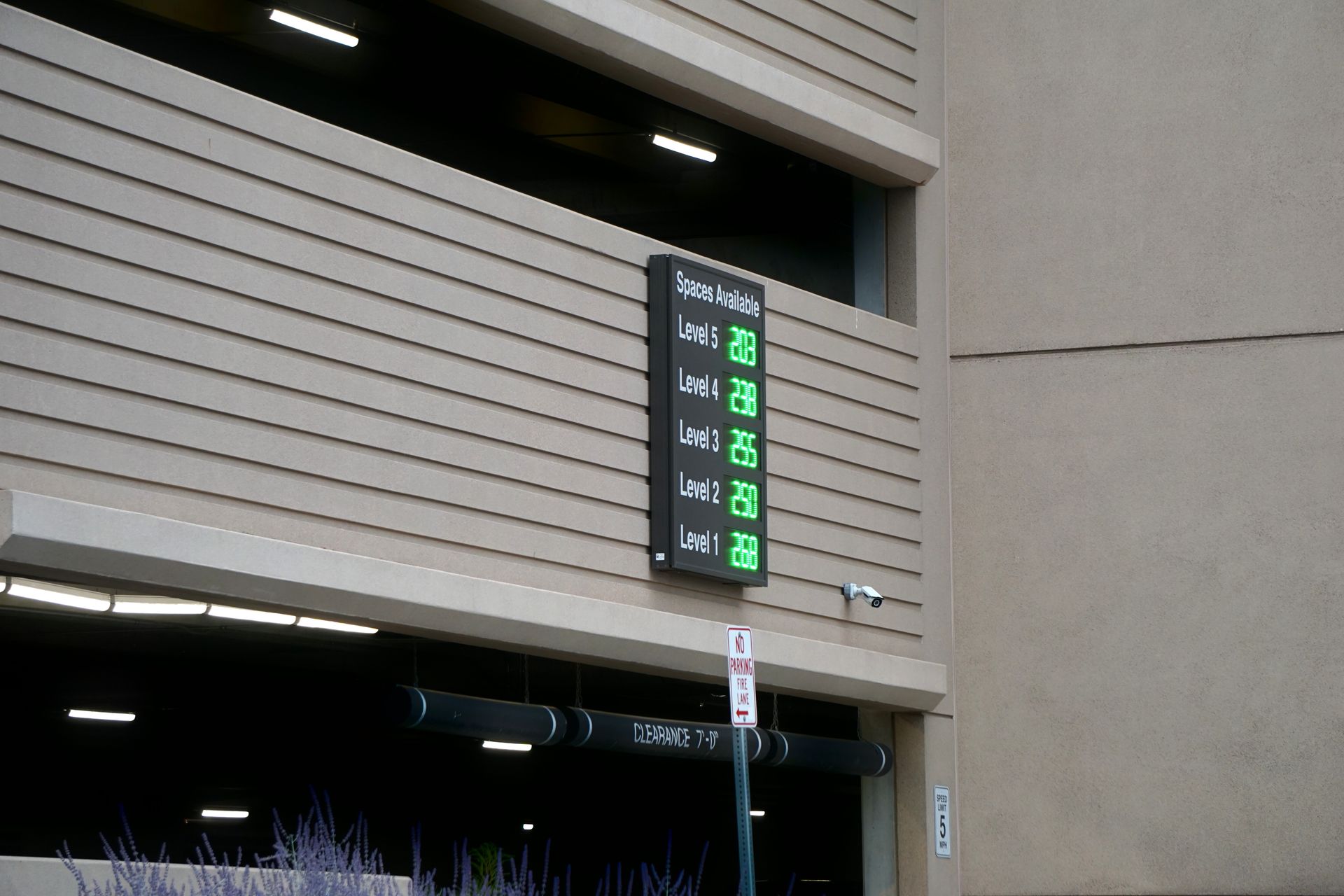
Put a standard LCD television outside in Dubai in July and you will have a very expensive broken screen within hours. The UAE climate is one of the most demanding operating environments on earth for electronic displays — summer temperatures routinely climb to 45°C or higher, dust storms sweep through without warning, and coastal humidity sits at levels that would corrode unprotected hardware overnight. Yet outdoor digital signage is proliferating across the city. From digitally transformed storefronts along Sheikh Zayed Road to interactive wayfinding totems at Dubai Festival City and Abu Dhabi's Corniche promenade, the market for outdoor digital displays in the GCC is growing fast.
The difference between an installation that lasts five years and one that fails in five weeks comes down to three things: IP rating, 亮度 (brightness), and thermal management. Get those right, and your outdoor display becomes a reliable, revenue-generating asset. Get them wrong, and you are burning money on hardware that desert heat will destroy.
Why Dubai Is the Hardest Test for Outdoor Displays
Few cities on earth challenge electronic hardware the way Dubai does. Direct sunlight in summer delivers solar loading that, combined with the heat generated by the display panel itself, can push internal cabinet temperatures well beyond what commercial-grade components are rated for. Typical indoor digital signage is designed to operate in environments up to 30°C. An outdoor display in direct UAE sunlight during August may face surface temperatures of 70°C or more.
Beyond heat, there is sand. Fine desert particulate works its way into ventilation systems, coats heat sinks, and clogs filters. There is humidity — coastal conditions mean moisture is present in the air almost year-round, accelerating corrosion on any metal components that are not properly sealed. And there are sandstorms, which can blast any installation with abrasive particles at high velocity.
A standard outdoor TV or consumer-grade outdoor screen purchased from a consumer electronics retailer will not survive these conditions. Dubai-grade installations require hardware engineered specifically for the environment — and that means paying careful attention to International Protection (IP) ratings.
Understanding IP Ratings for Outdoor Digital Signage
An IP rating — also known as Ingress Protection — defines how effectively a physical enclosure seals electronic hardware against intrusion from solid objects (like dust) and liquids (like water). It is expressed as a two-digit code: the first digit refers to solids, the second to liquids.
For outdoor digital signage in the UAE, IP65 is the minimum acceptable standard. Breaking this down:
- 6 — Dust Tight: Complete protection against contact with moving parts and total protection against ingress of dust. Non-negotiable in a desert environment.
- 5 — Protection Against Water Jets: Water projected from a nozzle (6.3mm) from any direction will not cause harmful effects. This covers rain, cleaning hoses, and sandstorm residue removal.
In practice, however, most experienced integrators recommend IP66 as the preferred rating for permanently exposed installations in the Gulf. IP66 offers protection against more powerful water jets and pressure washing — essential when displays need to be maintained in dusty, high-particulate environments. For installations facing the seafront or in areas with exceptionally high humidity, IP67 offers an additional margin of protection against temporary immersion.
It is not enough to specify a high IP rating without ensuring the installation maintains that rating. Every cable gland, every access panel, every ventilation shaft must be sealed to the same standard. A single poorly-terminated cable pass-through can compromise the entire enclosure. This is why working with certified integrators experienced in Middle Eastern conditions is not optional — it is the difference between a hardened installation and a false economy.
The Brightness Requirement: Why 3,000 Nits Is Just the Starting Point
Outdoor signage in Dubai has to compete with the sun. This is not a metaphorical competition — it is a physics problem. Standard commercial displays typically output 500 to 700 nits of brightness. Direct UAE sunlight delivers approximately 100,000 lux of illumination. A display readable in a mall or office lobby becomes completely illegible on a Dubai midday street.
For outdoor Dubai installations, high-brightness LCD panels typically need to output a minimum of 3,000 to 5,000 nits to remain readable in direct sunlight. For direct-view LED displays, the calculation is different — LED brightness is measured in nits for content and in candelas per square metre for perceived brightness, but the principle remains: the display must punch through ambient light.
The challenge with brightness is that it generates heat. The same LEDs that make the screen readable also produce thermal energy that the enclosure must dissipate. In a sealed IP66 cabinet operating under direct sunlight in 45°C ambient air, active cooling becomes essential — typically through thermoelectric cooling (Peltier-based), fans with filtered airflow, or in some cases, liquid cooling loops. Simply specifying a high-brightness panel without addressing thermal management results in throttling — the display automatically reduces brightness to protect itself, creating a situation where the screen that was supposed to be readable is now dimmer than the specification sheet promised.
Thermal Management: The Hidden Architecture of Reliable Outdoor Displays
Professional outdoor displays designed for Middle Eastern climates go beyond IP ratings and high-brightness panels. The internal architecture is engineered for thermal management in ways that are invisible when everything is working correctly — and immediately obvious when they are not.
Cabinet materials matter significantly. Cast aluminium and marine-grade aluminium alloys dissipate heat more effectively than steel, which also resists corrosion better in coastal humidity. Some installations use extruded aluminium frames with integrated heat sink fins that increase surface area for passive cooling without breaching the IP seal.
Ventilation strategy is nuanced. Open vents would defeat the IP rating, but sealed enclosures need managed airflow to prevent hotspots. Solutions include filtered positive-pressure ventilation — where fan-forced air flows through a contained pathway, maintaining slightly higher pressure inside the cabinet than outside, which prevents the ingress of dust-laden air through any microscopic gaps. Gore-type ventilation membranes are also widely deployed — they allow air exchange for pressure equalisation while maintaining the IP seal against water and dust.
Content scheduling also plays a role. In Dubai's market, many installers configure content playout systems to reduce brightness during cooler evening hours when ambient light is lower, reducing thermal load and extending component lifespan without compromising daytime visibility.
Direct-View LED vs. High-Brightness LCD: Which Is Right for Dubai Outdoors?
Dubai's outdoor digital signage landscape is served by two primary technologies: direct-view LED panels and high-brightness LCD modules. Each has distinct strengths for specific deployment contexts.
Direct-view LED panels are the dominant choice for very large formats — video walls on building facades, stadium scoreboards, and billboard-scale displays. LED panels emit their own light, so they do not suffer from the same sunlight washout issues as LCD. They also tolerate a wider temperature range. However, they require more sophisticated mounting infrastructure, have higher pixel pitch at normal viewing distances compared to LCD, and typically cost more per square metre for equivalent resolution.
High-brightness LCD panels are the practical choice for urban wayfinding totems, retail storefront displays, bus shelters, and transit applications where the display area is typically under 75 inches diagonal. Modern IP66-rated high-brightness LCD modules are fully engineered — including built-in cooling — for outdoor deployment in demanding climates. Manufacturers like BrightSign offer integrated player solutions that are rated for sustained operation in challenging thermal environments, making the full hardware-and-software stack more manageable for regional integrators.
What to Specify When Installing Outdoor Digital Signage in the UAE
Whether you are deploying a single totem on a Dubai Marina promenade or outfitting a network of 50 outdoor displays across a retail development, the specification checklist for UAE conditions is consistent:
- IP66 minimum (IP67 preferred for coastal installations) — full enclosure, all sides
- High-brightness panel: minimum 3,000 nits for LCD; confirm LED panel nits for the deployment distance
- Active thermal management: confirm the display is rated for ambient temperatures up to 50°C
- Anti-reflective (AR) and anti-glare (AG) glass for optimal sunlight readability and reduced cleaning requirements
- Marine-grade or aluminium cabinet with appropriate corrosion resistance certification
- Filtered ventilation with pressure management or Gore-type membrane venting
- Integrated BrightSign player or compatible industrial-grade media player with built-in thermal resilience
- Content scheduling with brightness dimming for evening/overnight thermal relief
The Bottom Line
Dubai's outdoor digital signage market is maturing fast. The days of deploying consumer-grade screens in harsh outdoor environments are fading, replaced by genuine engineering for the climate. The combination of IP66+ sealing, 3,000-nit-plus brightness, and purpose-built thermal management is now the baseline expectation for professional installations — and the prerequisite for any display network that needs to perform reliably through a UAE summer.
At DigiComm, we have supplied and deployed outdoor digital signage infrastructure across the GCC for over eight years, working with leading manufacturers including BrightSign and SwedX to deliver installations that survive the elements. If you are planning an outdoor display deployment in the UAE, speak to our team before you specify — the difference between a display engineered for Dubai and one that is simply labeled outdoor-rated can be measured in years of reliable service.