
Dubai retail has never been short on beautiful fit-outs. The real challenge in 2026 is different: how do you make a customer stop, understand the product, and remember the brand after they leave the store?
Static visuals still have a place, but they are no longer enough for premium showrooms, mall activations, airport retail, and brand experience zones. Customers expect the physical environment to respond. They want information without waiting for a sales associate, storytelling without friction, and product comparisons that feel as natural as browsing online.
This is where interactive product demos are becoming one of the most practical upgrades for Dubai brands.
What is an interactive product demo?
An interactive product demo is a retail or event display that reacts to customer behaviour. Instead of looping the same video all day, the system changes content based on what the visitor does.
A customer might lift a product, place it on a display zone, wave near a sensor, scan a QR code, select a comparison on screen, or walk into a defined area. The screen, lighting, audio, and sometimes the surrounding environment respond instantly with relevant content.
For example:
- A shopper lifts a perfume bottle and the display shows the scent notes, campaign film, and matching gift set.
- A visitor picks up a smartwatch and the screen compares battery life, materials, and key features.
- A sales consultant places two products on a table and a large LED screen shows a side-by-side comparison.
- An event guest approaches a product wall and the content switches from ambient visuals to a guided demo.
The result feels simple to the customer. Behind the scenes, it combines sensors, media players, content design, and careful AV integration.
Why Dubai brands are moving beyond passive screens
Dubai customers are exposed to world-class visual environments every day: malls, airports, hotels, exhibitions, luxury showrooms, and entertainment venues. A screen on the wall is no longer automatically impressive.
Interactive demos solve three problems that static displays struggle with:
1. They create a reason to engage
Most customers will not read long product copy on a screen. But they will pick something up, compare options, press a simple choice, or trigger content through movement. Interaction creates curiosity, and curiosity creates dwell time.
2. They make complex products easier to understand
Technical products, luxury items, electronics, wellness devices, automotive accessories, and B2B solutions often need explanation. Interactive demos let brands break that explanation into short, visual moments instead of overwhelming customers with brochures.
3. They support the sales team
A good interactive demo does not replace a sales consultant. It makes the conversation easier. The display can handle the repetitive explanation, while the consultant focuses on the customer’s specific needs, objections, and decision-making process.
The technology stack behind a strong demo
The best installations usually combine several layers, each doing a specific job.
Sensor-triggered interaction
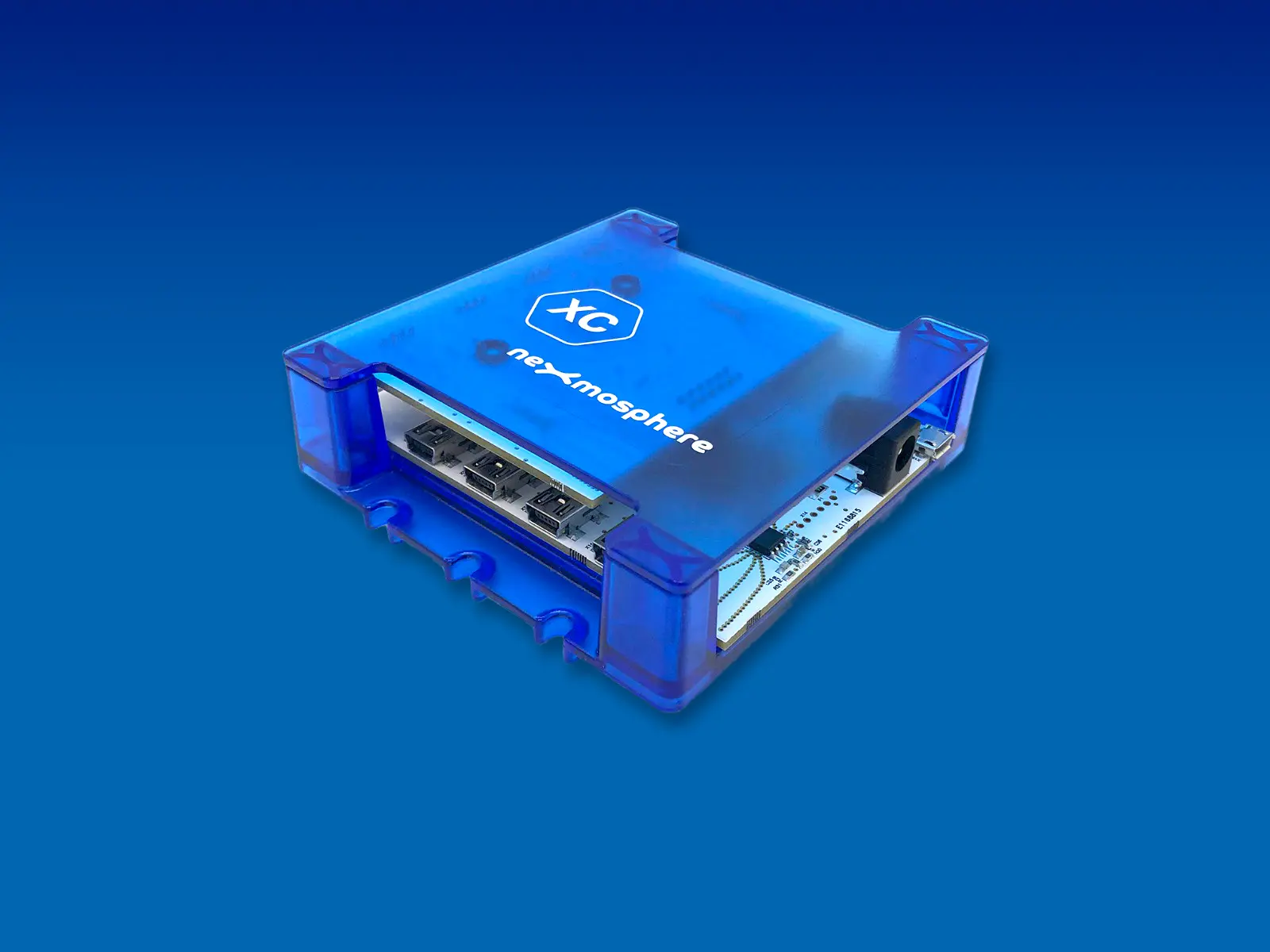
Technologies like pickup sensors, RFID, NFC, presence sensors, proximity sensors, touchless buttons, and motion triggers allow the display to react without forcing the customer through a complicated interface.
This is especially powerful for retail because the interaction follows natural behaviour. The customer does not need instructions. They simply pick up, place, approach, or gesture.
Reliable media playback
Interactive content only works if it responds instantly. A delayed screen change kills the illusion. Dedicated signage players such as BrightSign are built for dependable playback, sensor input, and 24/7 operation in public environments.
Custom content design
The hardware is only the skeleton. The real experience comes from the content: product films, CGI, UI screens, comparison graphics, animation, multilingual messaging, and brand storytelling.
For premium brands, the content cannot feel like a PowerPoint. It has to match the store design, brand tone, and sales journey.
Analytics and optimisation
Interactive systems can also help teams understand what customers actually engage with. Which product was picked up most often? Which comparison was viewed? Where did customers spend the most time?
That insight can shape merchandising, staff training, campaign messaging, and future store layouts.
Where interactive product demos work best
Interactive demos are not just for flagship stores. They are useful anywhere a product needs to be understood quickly and memorably.
- Luxury retail: watches, jewellery, fragrance, fashion accessories, cosmetics, and leather goods.
- Consumer electronics: phones, wearables, smart home products, audio devices, and gaming products.
- Automotive showrooms: model comparisons, accessories, charging technology, safety features, and finance packages.
- Real estate sales centres: unit selection, amenities, neighbourhood maps, and 3D masterplans.
- Exhibitions and brand activations: high-impact demos that explain the product even when the stand is busy.
- Corporate experience centres: B2B solution storytelling, dashboards, use cases, and guided presentations.
Common mistakes to avoid
The biggest mistake is treating interactivity as a gimmick. A sensor that triggers a random video is not a strategy. The experience needs to answer a real customer question or support a real sales objective.
Brands should avoid:
- Overcomplicated interfaces that need staff explanation.
- Slow transitions between interaction and content.
- Generic videos that do not match the specific product being handled.
- No clear call-to-action after the customer engages.
- Installing impressive hardware without a content refresh plan.
The best approach is simple: map the customer journey first, then choose the technology that supports it.
How DigiComm approaches interactive demos
DigiComm combines AV integration, digital signage hardware, sensors, content production, and on-site deployment into one workflow. That matters because interactive demos fail when each layer is handled in isolation.
Our team can design the interaction logic, recommend the right sensor and player setup, create the visual content, integrate the system, and support the installation after launch.
For brands using Nexmosphere, BrightSign, LED displays, touchscreens, projection, or custom CGI content, this joined-up approach keeps the experience polished and reliable.
The takeaway
In 2026, attention is the most expensive part of the retail environment. Interactive product demos help brands earn that attention by making the product story responsive, useful, and memorable.
For Dubai businesses competing in high-expectation spaces, the question is no longer whether screens should be digital. The better question is whether those screens are smart enough to react when the customer shows interest.
Planning a showroom, retail activation, or experience centre? Speak to DigiComm about building an interactive product demo that turns attention into engagement.