
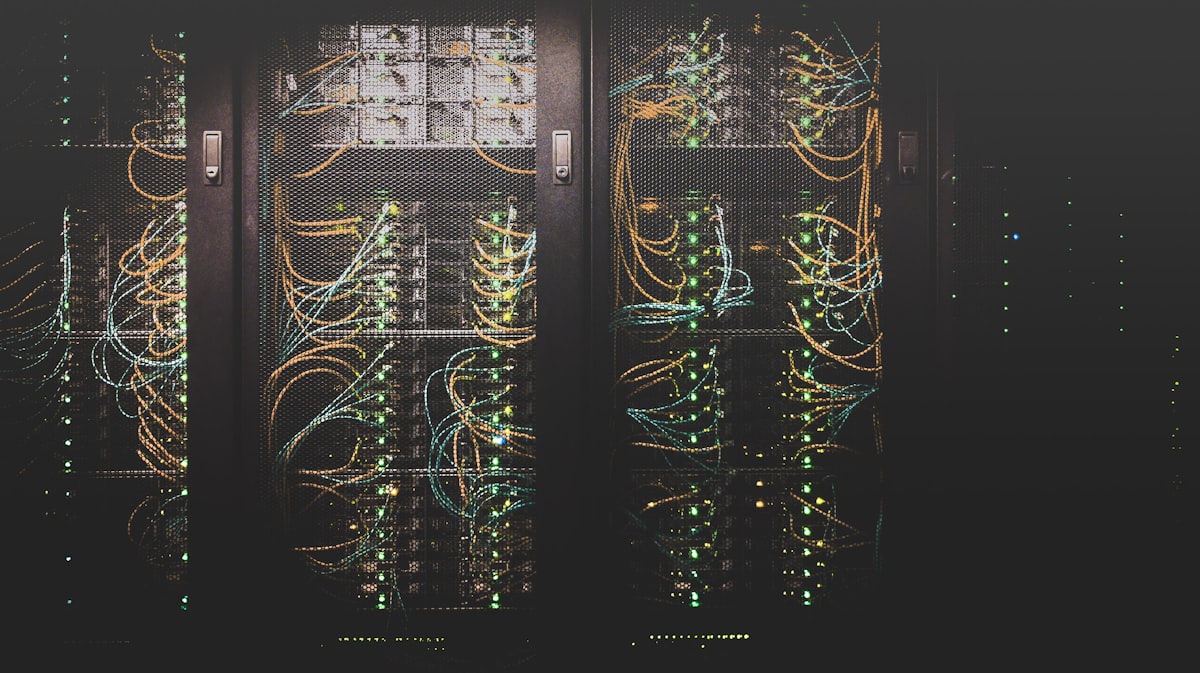
For years, professional AV systems in Dubai operated on a simple principle: one source, one display, one cable. A video processor here, a display there, connected by proprietary hardware and copper cabling running point-to-point across the building. It worked. But as businesses demand more flexibility, more scale, and more integration with their IT infrastructure, that model is quietly collapsing.
In 2026, AV-over-IP — the movement of audio, video, and control signals over standard IP networks — has gone from emerging technology to operational reality for Dubai enterprises. And for businesses still running legacy AV infrastructure, the question is no longer whether to make the switch, but how fast they can get there.
What Is AV-over-IP, and Why Does It Matter Now?
AV-over-IP refers to distributing audio and video signals over a standard Ethernet network rather than dedicated AV hardware. Instead of a matrix switch that physically routes signals to specific displays, AV-over-IP treats video streams as data packets that travel alongside emails, cloud traffic, and IoT data on the same network fabric.
The benefits are significant. A single network switch can route hundreds of video streams simultaneously. Content can go to any screen, anywhere on the network — no re-cabling required. And because the system is software-defined, changes to routing, scaling, or content sources happen in minutes through a dashboard, not days of hardware reconfiguration.
For Dubai businesses managing multiple venues, hybrid work environments, or complex event setups, this flexibility is the key driver of adoption in 2026.
SDVoE vs. IPMX: The Two Standards Shaping the Market
Not all AV-over-IP is the same. Two open standards have emerged as the primary options for businesses in the UAE:
SDVoE (Software Defined Video over Ethernet) targets zero-latency, high-bandwidth applications — primarily control rooms, boardrooms with 4K video walls, and broadcast environments. SDVoE operates on 10GbE networks and delivers visually lossless video at latencies under one millisecond. For businesses running mission-critical AV — think a Dubai Metro operations centre or a corporate command centre — SDVoE is currently the benchmark.
IPMX (IP Media eXperience), built on NMOS (Networked Media Open Specification), prioritizes interoperability and standard IT infrastructure. IPMX runs on 1GbE networks, which makes it far more cost-effective for businesses that already have existing IT switching in place. It integrates naturally with cloud-based content management systems, making it the preferred choice for organisations that want AV-over-IP without overhauling their entire network architecture.
For Dubai businesses, the choice often comes down to use case. A luxury hotel with a 4K video wall in its lobby and multiple meeting rooms will likely lean SDVoE for the performance. A corporate office across several floors, connecting signage and conference rooms to a central CMS, will find IPMX far more practical.
AV-IT Convergence: Why the IT Department Is Now Your AV Team
One of the most significant shifts in 2026 is the blurring of boundaries between AV and IT departments. In the old model, AV was its own domain — managed by specialist integrators, operating on separate infrastructure, and rarely intersecting with the IT team. AV-over-IP changes that entirely.
When your video distribution runs on the same switches as your cloud applications and employee devices, IT teams become de facto AV managers. Network security policies, bandwidth allocation, and Quality of Service (QoS) settings all affect how AV performs. In turn, AV system failures now show up in the same network monitoring tools that IT teams already use.
This convergence is accelerating across Dubai's enterprise sector. Companies that previously had separate AV and IT budgets are consolidating both under a single technology leadership structure. The result is more efficient operations, faster troubleshooting, and a significant reduction in the total cost of ownership for AV infrastructure over a five-year horizon.
For businesses planning new AV deployments or upgrades in 2026, engaging your IT team from day one is no longer optional — it is a prerequisite for success.
Real-World Applications Across Dubai Sectors
The practical applications of AV-over-IP span nearly every sector where digital displays and AV systems are present in Dubai.
Corporate and coworking: Businesses managing multiple meeting rooms, hot desks, and event spaces are using AV-over-IP to centralize control. A single IT administrator can route any content source — a presentation laptop, a video conference platform, a digital signage feed — to any screen in any room, without calling an AV integrator. For Dubai's expanding co-working sector, this flexibility directly impacts operational efficiency.
Retail: Mall operators and retail brands managing large-format video walls across multiple stores benefit from AV-over-IP's centralized content management. Changing a promotion across 50 locations in Dubai Mall takes minutes through a cloud-connected CMS — a process that previously required site-by-site visits from an AV technician.
Events and hospitality: Hotel conference centres and event venues in Dubai are deploying AV-over-IP to handle the multi-room, multi-format demands of corporate events. The ability to reconfigure AV routing for different event layouts without rewiring is a significant operational advantage. With Integrate Middle East taking place at the Dubai World Trade Centre this month, the region's leading AV professionals will be seeing the latest in networked AV solutions firsthand.
Education and government: Universities and government entities across the UAE are using AV-over-IP to connect lecture theatres, training centres, and remote offices. The NMOS-compatible IPMX standard is particularly well-suited for these environments, where procurement standards favour open, interoperable systems over proprietary solutions.
What to Consider Before Making the Switch
AV-over-IP delivers compelling advantages, but the transition requires careful planning. Businesses in Dubai considering a move should evaluate several key factors before committing to a deployment.
Network readiness: AV-over-IP places significant demands on your network infrastructure. A 4K video stream at 60Hz consumes approximately 12Gbps of bandwidth. For multiple streams across a building, you need a switched network with sufficient capacity and appropriate QoS configuration to ensure video frames arrive without stuttering. Older IT infrastructure may require upgrades before AV-over-IP becomes viable.
Bandwidth and switching: SDVoE deployments typically require 10GbE switching throughout. IPMX can run on 1GbE for lower-resolution streams, but true 4K performance still benefits from higher bandwidth. For many Dubai businesses, this means investing in a structured cabling review alongside the AV deployment.
Security: When AV streams share a network with business-critical applications and sensitive data, network segmentation becomes essential. Working with an AV integrator who understands IT security frameworks — and can coordinate with your internal IT team — is critical to avoiding vulnerabilities.
Vendor selection: The AV-over-IP market has expanded rapidly, and not all vendors offer the same level of performance, support, or interoperability. Look for manufacturers with demonstrated deployments in the GCC region, firmware update track records, and compatibility with both SDVoE and IPMX standards where relevant.
The Outlook for Network-Centric AV in Dubai
The shift toward network-centric AV is not a trend — it is a structural transformation of how professional AV infrastructure is designed, deployed, and managed. For Dubai businesses, the competitive advantage is clear: faster deployment, greater flexibility, lower long-term cost, and seamless integration with the broader IT ecosystem.
As the UAE continues its push toward smart city infrastructure and digital-first government services, the expectation for connected, intelligent AV systems will only grow. Businesses that invest in network-ready AV infrastructure now will be positioned to adapt quickly as new capabilities — AI-driven analytics, cloud-native content management, automated event workflows — become standard expectations rather than premium features.
At DigiComm, we design and deploy AV-over-IP solutions across the GCC using industry-leading hardware from BrightSign and open standards including SDVoE and IPMX. Whether you are upgrading a single boardroom or building a venue-wide networked AV ecosystem, we bring the expertise and product portfolio to make it happen.
Get in touch to discuss your AV infrastructure requirements for 2026 and beyond.