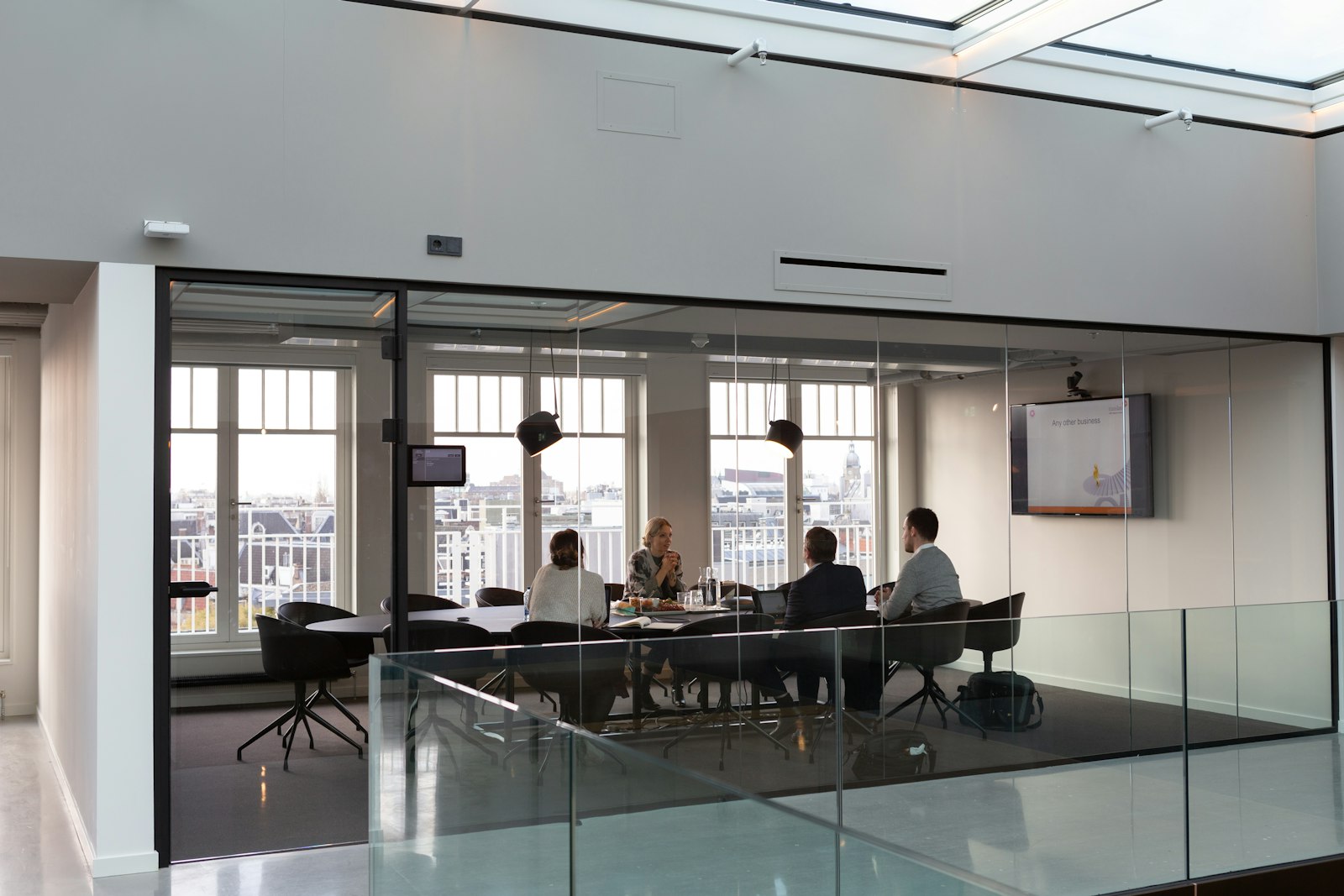
Walk into any boardroom at a Dubai multinational and you will likely hear a dozen languages before the first slide loads. The UAE is home to over 200 nationalities. Its corporations employ in English, Arabic, Hindi, Urdu, Tagalog, and more — sometimes within the same meeting. Until recently, that diversity was a logistical headache. In 2026, it is becoming a competitive advantage.
AI-powered real-time translation has moved from experimental novelty to enterprise infrastructure. In Dubai's smartest meeting rooms and event halls, simultaneous speech-to-text and speech-to-speech translation is enabling conversations that would have required rows of human interpreters just two years ago. The implications for productivity, inclusion, and regional expansion are significant.
Why Dubai's Meeting Rooms Needed This More Than Anywhere Else
Dubai's business ecosystem is structurally multilingual in a way few other cities are. A single project team might include an Emirati operations director, a British CFO, Indian sales managers, a Filipino HR lead, and Chinese investors — all in the same video call. The traditional workaround has been English as the corporate lingua franca, but that leaves Arabic speakers underserved and creates friction in high-stakes negotiations where nuance matters enormously.
Human interpreters are expensive, limited in availability, and impractical for day-to-day stand-ups or rapid-fire client calls. The alternative — broken communication — costs more in errors and missed context. AI translation solves both problems at once.
How the Technology Works in Practice
Modern AI translation setups for corporate rooms run on a straightforward stack: high-quality ceiling microphones capture voices clearly, edge AI processors run the speech-to-text models locally (reducing latency and keeping sensitive data on-premise), and display panels or attendee smartphones show live captions in whatever language each person has selected.
More advanced setups offer speech-to-speech translation — meaning a speaker talks in Mandarin, the system produces a natural-sounding Arabic translation in real time, and the response flows back just as quickly. This requires sophisticated voice synthesis, but the results in 2026 are remarkably humanlike for major language pairs.
For corporate events and conferences in Dubai — from GITEX GLOBAL to regional industry summits — QR code-based silent translation systems allow any attendee to tune into live translation via their own headphones. The AEEDC Dubai 2026 conference deployed this at scale, with delegates accessing real-time English-to-Arabic translation on their phones by scanning a single code at their seat.
Key Solutions Available to Dubai Enterprises in 2026
Several platforms have established themselves as viable for enterprise deployment in the UAE market:
- DeepL Voice-to-Voice (launched April 2026) — Supports 40+ languages including Arabic, integrates directly with Zoom and Microsoft Teams. Early enterprise access available for organizations in the UAE looking for a fast rollout.
- DLC Events (Dubai-based) — Award-winning AI speech translation for conferences and corporate meetings across the Middle East. Particularly strong for English-Arabic and cross-language pairings for events.
- Wordly — Budget-friendly AI captions, translation, and live transcripts for in-room and hybrid meetings. Good option for mid-sized businesses scaling across multiple offices.
- Interprefy AI — Silent conference systems widely used at Dubai exhibitions and large-scale corporate events. Supports 30 to 100+ languages simultaneously from a single hardware setup.
The AV Infrastructure That Makes It Work
AI translation is only as good as the audio feeding it. In a noisy conference room with reverberant glass walls — a common feature in Dubai's commercial towers — even the best translation engine will struggle. That is why AV design matters here.
High-quality beam-forming ceiling microphone arrays can isolate individual speakers, reject ambient noise from air conditioning and city traffic, and deliver clean audio to the translation engine. Paired with DSP processors for echo cancellation and automatic gain control, these systems ensure that what the AI hears is what was actually said — not a garbled approximation.
For organizations running BrightSign-powered digital signage in their meeting rooms, the same infrastructure can display live captions on room screens, reducing the need for every attendee to wear headphones or watch their phone.
Privacy, Compliance, and the Arabic Language Challenge
A legitimate concern for enterprises in the UAE is data privacy. Any AI system processing internal meetings needs to operate within the region's regulatory framework. Cloud-based translation services that send audio to offshore servers are a non-starter for many regulated industries. Edge AI deployments — where processing happens locally on hardware in the room — are increasingly the preferred architecture for compliance-conscious organizations.
Arabic translation accuracy has historically lagged behind English in AI systems. In 2026, this has improved substantially. Modern models handle Modern Standard Arabic well, and some systems are beginning to tackle Emirati and Gulf Arabic dialects with reasonable accuracy. For now, organizations handling sensitive Arabic-language content often run a hybrid model: AI handles routine translation and live captions, while human reviewers step in for high-stakes negotiations or legal discussions.
What This Means for Your Meeting Room Strategy
If you are specifying AV for a new Dubai office or upgrading existing meeting facilities, translation capability should now be on the requirements list — not as a nice-to-have, but as standard infrastructure. The cost of including AI translation in a new build is a fraction of the retrofit cost later, and the productivity gains for multilingual teams are immediate.
Consider a phased approach: start with a cloud-based translation platform for hybrid meetings (lowest barrier to entry), pilot an edge AI setup in your most-used executive conference room, and expand based on the data. Measure things like meeting start time delays, misinterpretation incidents, and employee satisfaction scores across language groups.
Where This Is Heading
By 2027, analyst projections suggest that AI translation will be embedded as standard feature in most enterprise video conferencing platforms, rather than a standalone add-on. Dubai's position as a global business hub means it will be among the earliest and highest-volume adopters.
The next frontier is emotion and tone adaptation — AI systems that can detect when a speaker's tone is frustrated or persuasive and adjust translation register accordingly. That is still largely experimental, but the direction is clear: translation will soon do more than simply convert words. It will help bridge cultural context, too.
At DigiComm, we design AV systems for Dubai enterprises that integrate translation capability, digital signage, spatial audio, and AI content management into cohesive meeting room ecosystems. If you are evaluating how to equip your teams for a truly multilingual workplace, get in touch — we can spec and deploy a solution tailored to your space, your languages, and your security requirements.