
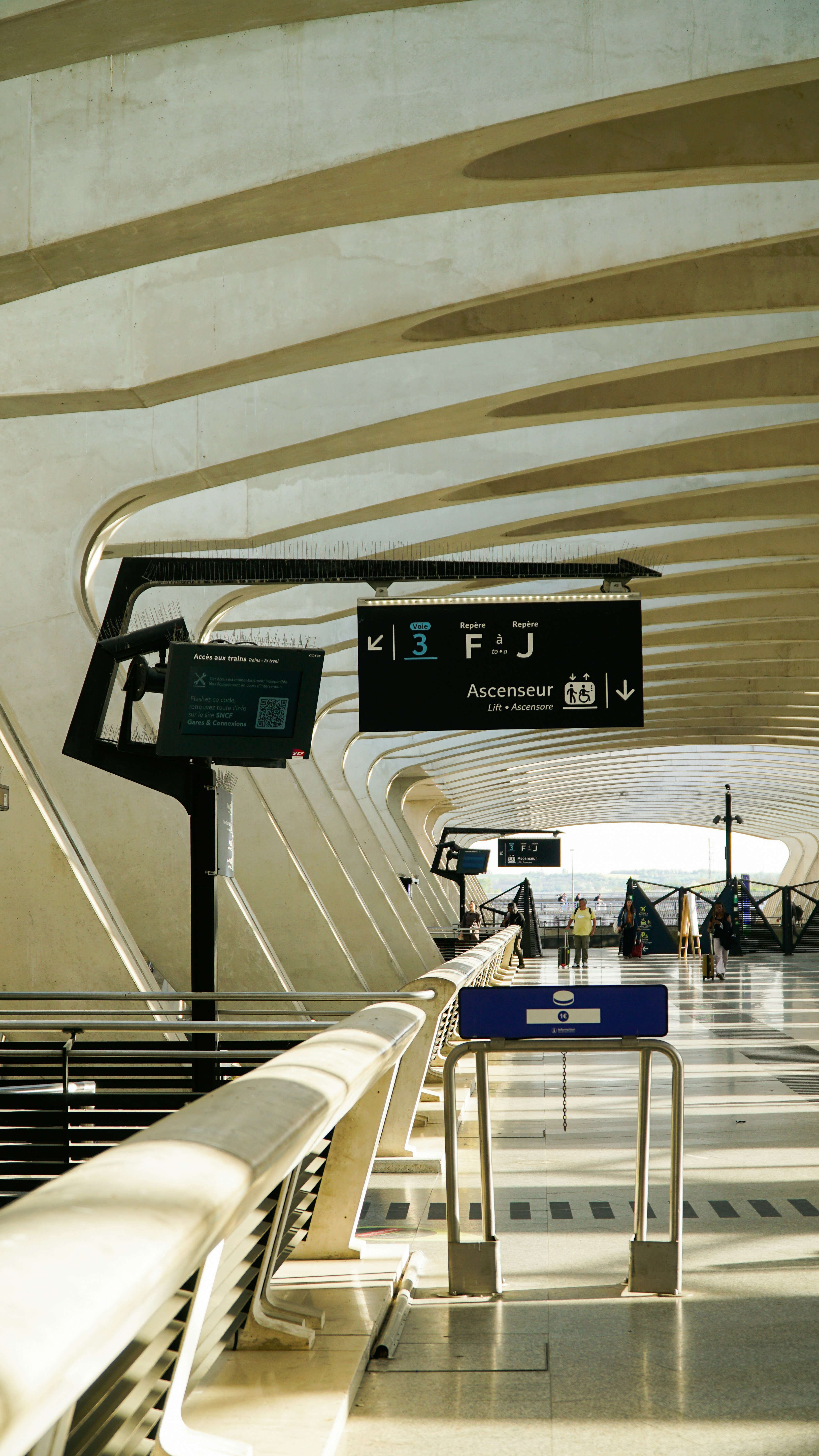
Getting lost inside a Dubai mall, airport terminal, or event venue may soon feel like a relic of the past. In 2026, AI-powered indoor wayfinding is quietly reshaping how millions of people navigate complex indoor spaces across the UAE — using real-time positioning, predictive routing, and augmented reality overlays to guide visitors with supermarket precision.
The shift is being driven by two forces colliding: a venue landscape in Dubai growing more architecturally ambitious by the year, and AI systems sophisticated enough to model and predict human movement in real-time. For venue operators, the result is a transformation that goes far beyond convenience — it is a measurable driver of dwell time, retail revenue, and operational efficiency.
The Navigation Problem: Why Complex Venues Need AI
Research shows that approximately 53% of visitors to large venues report frustration with navigation. In spaces like Dubai Mall — which welcomes over 100 million visitors annually — or the Dubai Metro-linked corridors of DIFC, navigating from A to B is rarely straightforward. Static signage was never designed for spaces this large, this dynamic, or this diverse in visitor profile.
Traditional digital directories have a fundamental flaw: they assume the user knows where they are and what they want. AI-powered indoor navigation flips this on its head. Modern systems can detect a visitor's approximate location via Bluetooth Low Energy (BLE) beacons, Ultra-Wideband (UWB) sensors, or even existing Wi-Fi infrastructure, then serve a personalized route based on real-time data — whether that is avoiding a congested corridor, redirecting visitors based on a store promotion, or guiding a wheelchair user to the nearest accessible lift.
How It Works: The Technology Stack
Modern AI indoor wayfinding in Dubai venues is not built on a single technology — it is a layered stack that combines hardware, connectivity, and intelligence.
Indoor Positioning Systems (IPS) form the foundation. BLE beacons — small, low-cost sensors mounted throughout a venue — can locate a visitor to within 2 to 5 metres at minimal infrastructure cost. For higher-precision needs such as healthcare facilities or VIP zones, Ultra-Wideband (UWB) technology delivers sub-metre accuracy. In 2026, multi-sensor fusion — combining BLE with inertial navigation, visual recognition, and 5G connectivity — is emerging as the gold standard for large-scale Dubai venues that need accuracy without prohibitively expensive hardware deployments.
AI and Machine Learning sit above the positioning layer. These systems do not simply calculate routes — they predict them. By analyzing patterns in foot traffic, time of day, event schedules, and historical data, AI engines can anticipate congestion before it builds, suggest optimal meeting points, and dynamically reroute visitors. Machine learning models refine accuracy continuously, adapting to seasonal changes, construction diversions, or the unique flow patterns of different visitor demographics.
Augmented Reality Overlays represent the user-facing layer. Through smartphone cameras and WebAR — accessible via a simple QR code scan with no app download required — visitors see floating directional arrows, virtual landmarks, and turn-by-turn navigation overlaid on the real world. For Dubai's Gen Z and millennial visitors, who show a 78% preference for digital-physical blended experiences, AR wayfinding is not a novelty — it is the expected standard.
Dubai Venues Leading the Way
Several categories of Dubai venues are already seeing transformative results from AI wayfinding deployment.
Retail Malls and Centres are among the most active adopters. AI wayfinding integrates directly with digital signage networks — platforms like those powered by BrightSign media players — to display not just static directory information but real-time, personalized recommendations. Imagine approaching a digital signage kiosk and being guided not just to a store, but to the shortest queue, the store with a current promotion matching your purchase history, or a pop-up experience that aligns with your interests. Proximity marketing — triggered when a visitor passes near a sensor — allows brands to deliver contextually relevant offers at precisely the right moment.
Airports and Transit Hubs are another major application area. Dubai International Airport and Al Maktoum International see tens of millions of passengers annually. AI wayfinding helps travellers navigate terminal transfers, locate gates with time-to-spare, and find amenities specific to their journey profile. In 2026, these systems increasingly integrate with airline apps and Dubai's broader smart city infrastructure to provide end-to-end journey visibility from city centre to boarding gate.
Event Spaces and Stadiums represent the highest-stakes deployment. At major venues like the Coca-Cola Arena or Dubai Exhibition Centre, AI wayfinding is critical for managing crowd flow, reducing pressure on staff, and enhancing the attendee experience. Predictive routing helps event organizers identify bottlenecks before they form, while AR navigation guides visitors to their seats, concession stands with the shortest lines, or the nearest accessible facilities. The data collected from these systems provides post-event insights that were previously impossible to capture.
Digital Signage as the Wayfinding Interface
A critical enabler of AI wayfinding in Dubai venues is the integration with existing digital signage infrastructure. Interactive kiosks and directory screens — powered by BrightSign or integrated with Nexmosphere sensor platforms — serve as both navigation anchors and data collection points.
At DigiComm, we have deployed interactive wayfinding solutions across a range of UAE venues, combining reliable commercial-grade hardware with AI routing engines that learn from aggregate movement data. The result is a system that gets smarter over time: the more visitors use it, the more accurate and context-aware the routing becomes.
Critically, these systems also generate commercial value for venue operators. Real-time queue monitoring displayed on signage screens reduces perceived wait times and improves the visitor experience. Dynamic advertising slots can be sold against navigation context — a visitor navigating toward a fashion store might see a relevant promotion from an adjacent brand — creating a new revenue stream from the wayfinding infrastructure itself.
Accessibility and Inclusivity
One of the most compelling aspects of AI wayfinding is its potential for accessibility. Voice-guided navigation through natural language processing, haptic feedback for visually impaired users, multilingual interfaces supporting Arabic, English, and the UAE's diverse expatriate languages — these features are no longer optional additions. In 2026, they are being designed into the core architecture of wayfinding platforms from the outset.
For Dubai's venues, which welcome visitors from over 200 nationalities, multilingual capability is a practical necessity as much as an inclusivity commitment. AI wayfinding systems that can dynamically switch language based on user preference — or offer real-time translation for signage content — represent a meaningful competitive advantage for operators seeking to deliver a world-class visitor experience.
The ROI Case for Venue Operators
Beyond the visitor experience, AI indoor wayfinding makes a compelling financial case for Dubai venue operators. Research across comparable global markets indicates that venues deploying intelligent wayfinding systems see measurable improvements in key metrics: retail tenants report higher conversion rates when foot traffic is guided rather than left to chance, F&B outlets see reduced average queue lengths through dynamic rerouting, and post-visit satisfaction scores increase when visitors can navigate efficiently.
Operational efficiency gains are equally significant. Real-time crowd density data allows security and operations teams to respond to congestion proactively rather than reactively. Analytics dashboards built on wayfinding data reveal previously invisible patterns — which corridors are perpetually underused, which retail zones attract the most through-traffic, which entrances experience peak pressure at specific times. This data is infrastructure for smarter venue management.
Conclusion: The Smart Venue is Already Here
AI-powered indoor wayfinding is no longer a future concept — it is a present reality reshaping how Dubai's venues function, compete, and generate value. For retail operators, event managers, and venue owners across the UAE, the question is not whether to adopt intelligent navigation, but how quickly to deploy it.
At DigiComm, we design and deploy AI wayfinding solutions as part of our broader Solutions and Events service offerings. From hardware procurement and sensor infrastructure to AI platform integration and content management, we provide end-to-end delivery for venues that want to move from static signage to intelligent, responsive navigation environments.
If your venue is ready to stop losing visitors to bad directions, get in touch with our team to explore how AI wayfinding can transform your space.