
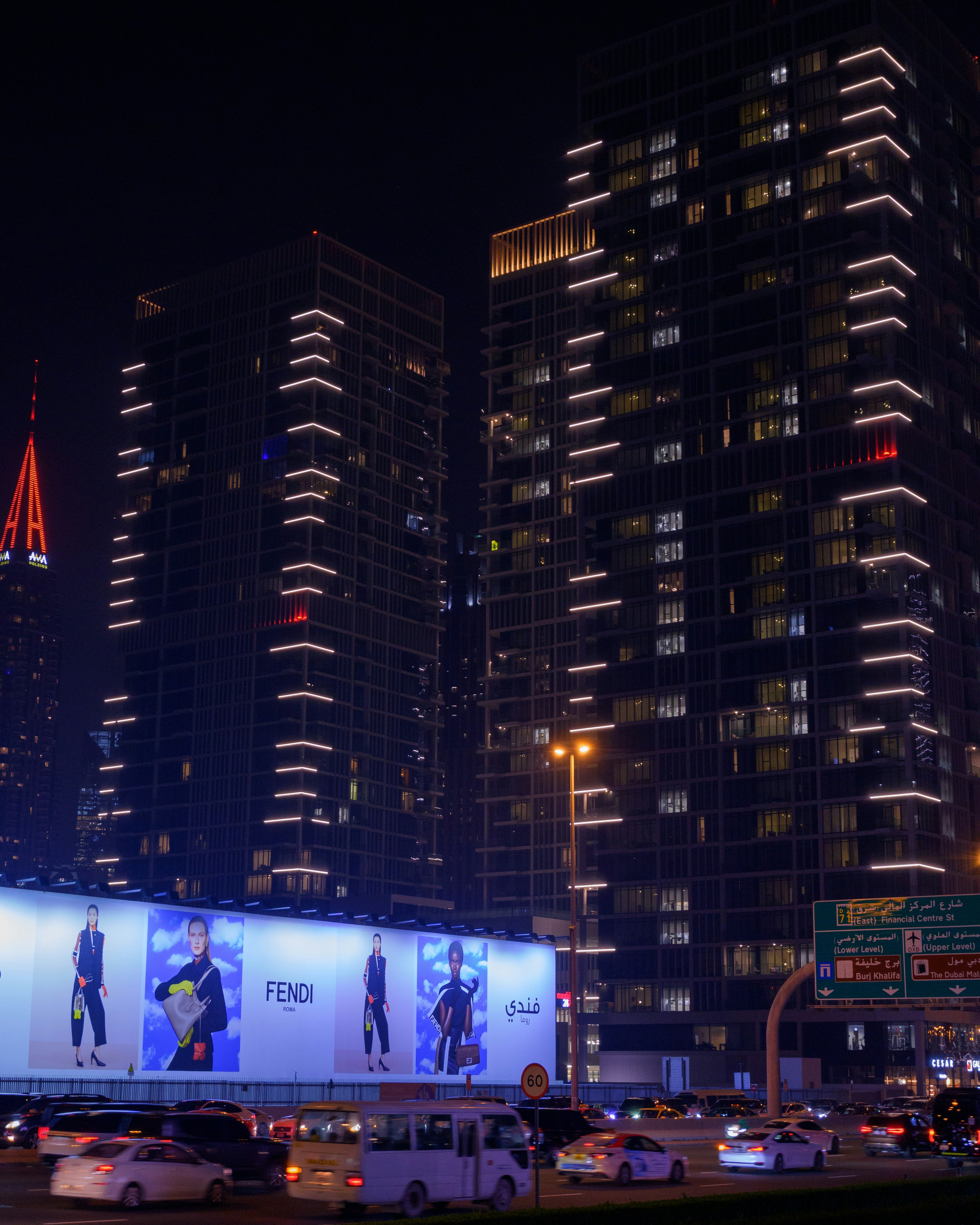
In 2026, something fundamental has shifted in how brands win customers. It is not just humans discovering your products anymore — it is AI agents working on their behalf. Autonomous AI systems now handle product discovery, price comparison, and direct purchasing for an estimated 60% of e-commerce transactions. They are what industry experts are calling the "fourth place of commerce" — alongside physical stores, apps, and websites. And here is what every Dubai brand needs to understand: these agents are paying attention to your physical presence, particularly your digital out-of-home (DOOH) advertising.
This is not a theoretical trend. It is already reshaping how brands compete — and it has direct implications for the AED 1.6 billion UAE OOH market, where Dubai accounts for approximately 73% of all spend.
What Are Agentic AI Systems?
Agentic AI refers to autonomous AI systems that can independently plan, execute, and optimize tasks — without requiring a human to guide each step. They do not just answer questions; they take actions. They research options, compare prices, negotiate terms, and complete purchases — often without the human user even being involved in the transaction itself.
Think of them as hyper-efficient personal shoppers that never forget a detail, never get emotionally manipulated, and always prioritize trust, relevance, and verified signals. When one of these agents is making a recommendation — whether to a consumer or a business buyer — it draws on every publicly available signal it can find. And increasingly, that includes your DOOH footprint.
Why DOOH Is Becoming an AI Signal
Here is the mechanism that is changing everything. Agentic AI systems are trained on vast datasets of human behavior — search queries, social mentions, reviews, purchase patterns, and real-world exposure. When a brand runs a high-profile DOOH campaign in a place like Dubai Mall, the Dubai Metro, or Sheikh Zayed Road, it generates real-world signals: people photograph it, share it on social media, search for the brand afterward, and talk about it in contexts that AI systems index and weigh.
This is not about DOOH ads directly feeding into AI systems. It is subtler and more powerful than that. DOOH creates earned visibility — the kind of authentic, publicly observable presence that AI systems interpret as indicators of brand popularity and trustworthiness. A billboard that generates online conversation, QR code scans, and localized search spikes is a brand that AI agents learn to trust and prioritize.
For Dubai brands, this means the question is no longer just "Is my DOOH campaign reaching humans?" It is also "Is my DOOH campaign generating the signals that AI agents are learning from?"
The Numbers Behind the Shift
The scale of this transformation is significant. Global DOOH advertising is projected to reach USD 33.4 billion in 2026, with the UAE market growing at a 12-16% CAGR and expected to exceed USD 62 million this year alone. Dubai International Airport handled 91.6 million travelers in 2024. The Dubai Metro recorded 230 million annual trips. The Dubai Mall saw 105 million visitors. These are not just footfall numbers — they are signal-generating environments where every meaningful brand interaction leaves a data trace.
Within this ecosystem, programmatic DOOH is accelerating the transformation. By the end of 2026, programmatic DOOH is expected to account for 38-42% of digital out-of-home spend in Dubai, up from just 12% in 2024. This shift matters because programmatic platforms generate the real-time data feeds that AI systems can ingest and act upon — enabling dynamic creative optimization, audience-based targeting, and measurable attribution that was previously impossible in OOH.
How AI Agents Are Planning DOOH Campaigns
The transformation extends to how campaigns are created and bought. By late 2026, at least 25% of global DOOH and video campaigns will be planned by agentic AI. These systems can convert a simple natural-language brief — such as "Target urban professionals for a new F&B brand across Dubai Metro screens during morning rush" — into a fully optimized, multi-location media plan in seconds, incorporating predictive analytics for foot traffic, weather conditions, event calendars, and historical conversion data.
Tools like AdOmni's JEEN are already enabling AI-driven programmatic DOOH planning, making capabilities that were previously reserved for large brands with dedicated media teams available to small and medium businesses across Dubai. This democratization means that even local brands can now benefit from the kind of intelligent, data-driven campaign optimization that was previously the exclusive domain of multinational advertisers.
Dynamic Creative: DOOH That Responds to Commerce Signals
One of the most powerful applications of agentic AI in DOOH is dynamic creative optimization (DCO). AI systems can now swap out DOOH ad content in real-time based on commerce signals — inventory levels, sales velocity, competitor activity, weather patterns, and real-time audience density. A restaurant brand can automatically promote breakfast deals on screens near metro stations during morning hours, then switch to lunch offers by midday, and dinner promotions in the evening — all without manual intervention.
This is not just responsive advertising — it is AI-orchestrated advertising, where the system is making micro-optimization decisions continuously throughout the day based on data that humans could never process at that speed and scale.
What This Means for Dubai Brands
For brands operating in Dubai, the implications are clear. Your DOOH presence is no longer just a human-facing marketing channel — it is a signal-generating infrastructure that AI systems are increasingly incorporating into their recommendation algorithms. The brands that understand this shift, and invest in intelligent, data-rich DOOH strategies, will enjoy a compounding advantage in an AI-driven commerce landscape.
Conversely, brands that treat DOOH as a purely awareness-driven medium — one that does not connect to measurable digital outcomes — risk being overlooked by the growing share of commerce that flows through AI agents.
Dubai's unique position — with world-class digital infrastructure, high-traffic physical environments, and a rapidly maturing programmatic DOOH ecosystem — makes it one of the most exciting markets in the world for this convergence. The brands that move now, building DOOH strategies that generate robust, AI-readable signals, will be the ones that AI agents recommend when your next potential customer delegates their purchasing decisions to an autonomous system.
Building an AI-Ready DOOH Strategy
If you are a brand in Dubai looking to future-proof your DOOH investment, there are several principles worth keeping in mind. First, prioritize signal-generating placements — locations where your campaign is likely to trigger QR scans, social sharing, and localized searches. Second, ensure your programmatic infrastructure is in place so your campaigns generate the real-time data feeds that AI systems can act upon. Third, invest in dynamic creative capabilities so your content can adapt in real-time to commerce signals rather than running static, non-responsive campaigns.
DigiComm works with brands across Dubai and the UAE to design and deploy intelligent digital signage and DOOH strategies — from BrightSign-powered display networks to AI-driven content management systems that generate the signals AI agents are learning to read. If you want to understand how your brand can compete effectively in an AI-agent-driven commerce landscape, the time to start is now.